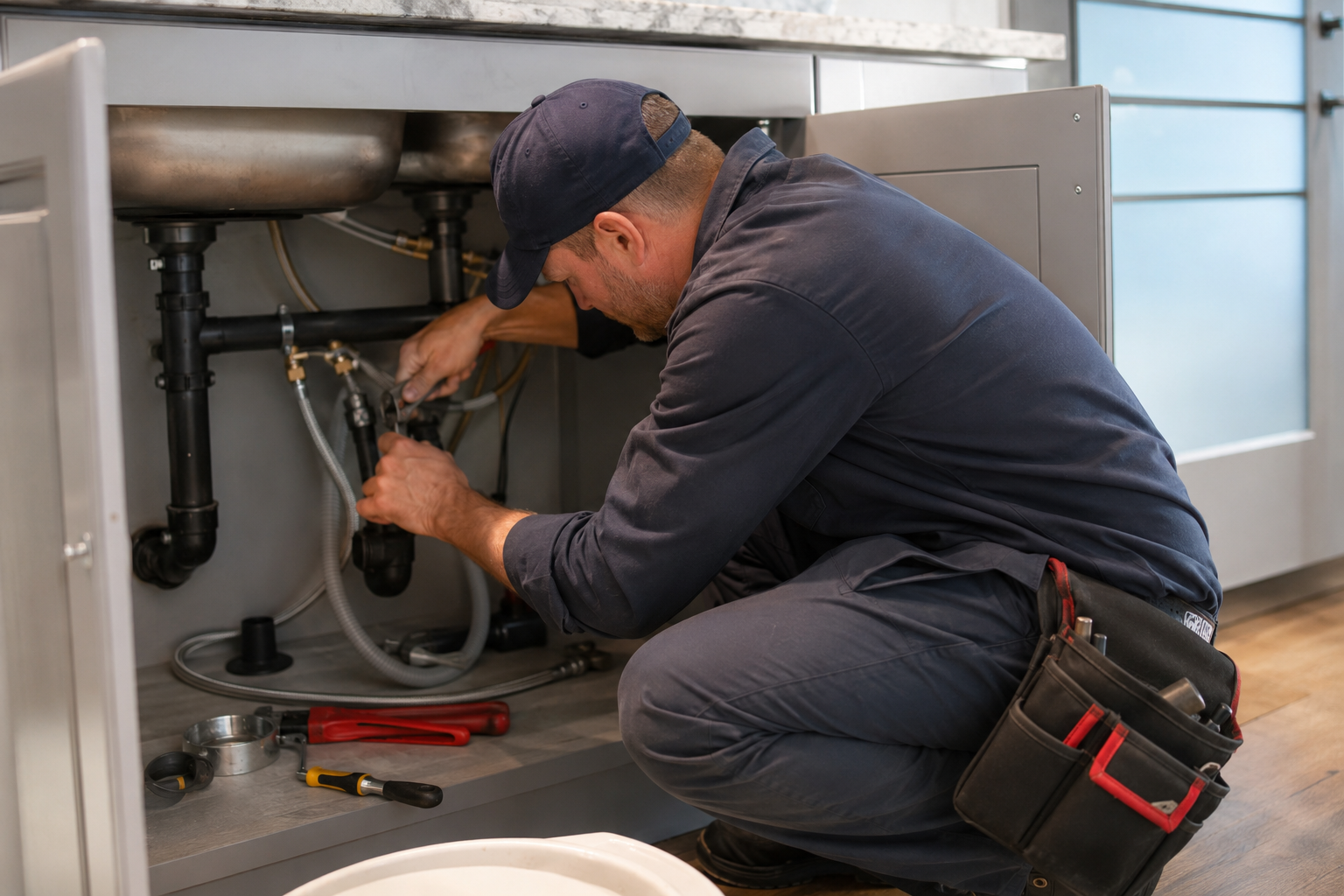
Emergency Plumbing Services in Brandon, FL
Need an emergency plumber in Brandon, FL? Request urgent help for burst pipes, uncontrolled water, sewer backups, overflowing toilets, ruptured water heaters, failed sump pumps, and plumbing problems involving electricity or sanitation.
- Burst pipes and active leaks
- Sewer and drain backups
- Overflowing toilets and fixtures
- Water-heater and sump failures
What Counts as a Plumbing Emergency?
A plumbing problem is generally an emergency when it creates an immediate risk of property damage, wastewater exposure, loss of an essential plumbing function, or contact between water and electricity.
Common examples include a burst pipe, uncontrolled leak, sewer backup, toilet overflow that cannot be stopped, ruptured water heater, failed sump pump during active water entry, water spreading through a ceiling or wall, or water near electrical equipment.
A dripping faucet, running toilet, or one slow drain may usually be scheduled when the water is contained, no wastewater is present, and the problem is not actively damaging the property.
When it is safe, stop using the affected fixture, close the nearest clearly identified shutoff, keep people away from wastewater and wet electrical equipment, and do not add chemical drain cleaner to a backup.
Call (656) 246-1108 and explain whether water is still flowing, which fixtures are affected, and whether sewage, electricity, or gas may be involved.
Is This a Plumbing Emergency?
The amount of visible water is not the only factor. A smaller leak inside a wall, near electricity, or involving sewage can be more urgent than clean water safely contained inside a sink or bathtub.
| Plumbing problem | Usually urgent? | Recommended action |
|---|---|---|
| Burst pipe with active flow | Yes | Shut off water when safely possible and call |
| Water entering a wall or ceiling | Yes | Stop the connected water source when possible |
| Sewer backup through several fixtures | Yes | Stop using all connected fixtures |
| Toilet overflowing uncontrollably | Yes | Close the toilet supply valve when accessible |
| Water-heater tank has ruptured | Yes | Stop water and power or fuel only when safe |
| Water is near an outlet or appliance | Yes | Stay out of the wet area |
| Gas odor or unexplained hissing | Yes | Leave immediately and call 911 from a safe location |
| Sump basin is overflowing | Yes | Avoid wet plugs, batteries, outlets, and controls |
| One drain is slow but still draining | Usually not immediate | Reduce use and schedule drain service |
| Faucet drips into the sink | Usually not immediate | Use its local shutoff if necessary |
| No hot water without a leak or gas concern | Urgent, not always an emergency | Request water-heater assessment |
| No water throughout the property | Depends | Check for an outage, closed valve, or private-line failure |
Who Should You Contact During the Emergency?
Plumbing service may address the water or wastewater source, but utility repairs, electrical work, restoration, septic service, roofing, and structural repair are separate responsibilities.
| Situation | Appropriate first contact |
|---|---|
| Burst pipe or private supply-line leak | Plumbing service |
| Several fixtures backing up inside | Drain or sewer plumbing service |
| Street flooding unrelated to rain | Water or wastewater utility |
| Neighborhood-wide water outage | Water utility |
| Suspected natural-gas leak | Leave, call 911, then contact the gas utility |
| Standing water near electrical equipment | Keep away and contact an electrical provider |
| Water extraction, drying, or mold | Water-damage restoration provider |
| Septic tank or drain-field problem | Septic service provider |
| Roof water entering during rainfall | Roofing or building-envelope provider |
| Plumbing failure affecting a business | Commercial plumbing service |
What Should You Do Before Plumbing Help Arrives?
Use only actions that can be completed without entering an unsafe area or forcing damaged equipment.
| Emergency | Safe first action |
|---|---|
| Burst or broken pipe | Close the nearest working shutoff or main valve |
| Leak beneath a sink | Close the hot and cold fixture valves |
| Toilet overflowing | Stop flushing and close the toilet supply valve |
| Sewer backup | Stop using connected toilets, sinks, showers, and appliances |
| Water-heater leak | Close its cold-water supply when safe |
| Washing-machine leak | Stop the machine and close both supply valves |
| Refrigerator-line leak | Close the appliance or connected fixture valve |
| Sump pump failure | Stay away from wet plugs, batteries, and outlets |
| Water near electricity | Do not enter the wet area or touch equipment |
| Suspected gas leak | Leave the property immediately |
How Do You Shut Off the Main Water?
The property’s private main water shutoff may be located:
- Where the main pipe enters the building
- In a garage or utility area
- Near the water heater
- On an exterior wall
- Near the front hose faucet
- Inside a ground-level valve box
- Near—but separate from—the utility water meter
Hillsborough County says water meters are generally near the curb inside a meter box and are often aligned with the property’s main exterior faucet. Private shutoff locations still vary. Review Hillsborough County water-leak and meter guidance.
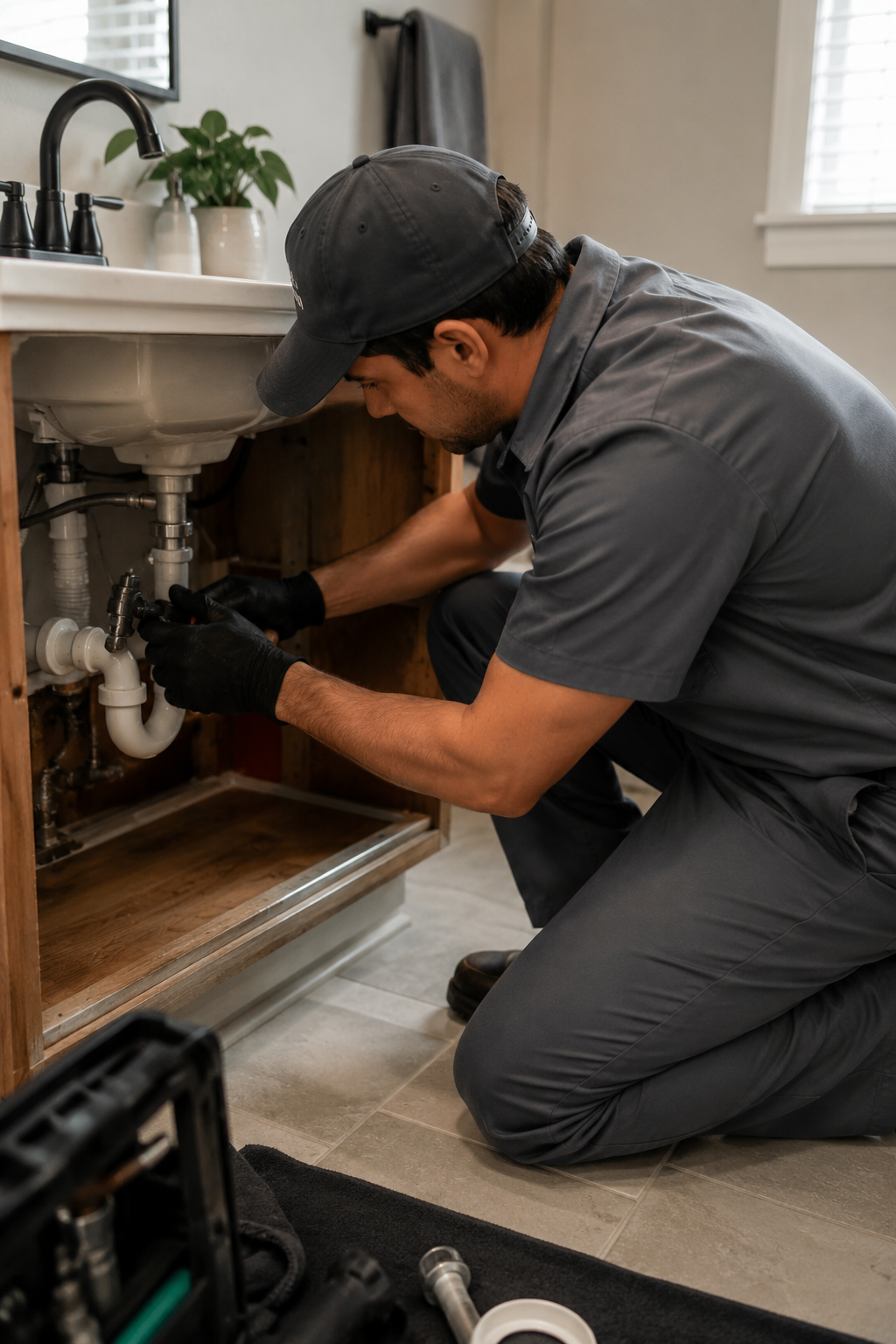
Emergency Pipe Leaks and Burst Pipe Repair in Brandon
A burst pipe or failed supply connection may continue releasing water until the affected fixture, branch line, or main supply is isolated.
Signs of a Broken Pipe
- Water spraying from an exposed pipe
- Sudden water spreading across a floor
- Water appearing through drywall
- Rushing or hissing behind a wall
- Rapid loss of water pressure
- Meter movement while fixtures are off
- Expanding ceiling or wall damage
Possible Leak Sources
- Water pipe, fitting, or joint
- Broken shutoff valve
- Toilet or faucet connector
- Washing-machine or dishwasher hose
- Refrigerator or ice-maker line
- Water-heater connection
- Exterior faucet or private service line
When Wider Pipe Work May Be Needed
- Several leaks have occurred
- Pipe walls are heavily corroded
- Multiple fittings are failing
- Previous patches keep failing
- Concealed piping has wider damage
- The private service line is compromised
What Should You Do if the Ceiling Is Bulging?
Do not stand beneath a ceiling that is sagging, bulging, cracking, or releasing water. Wet drywall, plaster, insulation, and ceiling materials may become heavy and unstable.
- Keep people and pets away
- Do not puncture the ceiling
- Do not touch wet light fixtures or wiring
- Do not stand under sagging material
- Shut off the water only when safely accessible
Concealed or Recurring Leak?
Plumbing service may address the water source. Ceiling removal, electrical work, structural assessment, drying, drywall, and restoration may require separate providers.
For hidden moisture, repeated pipe failures, or uncertain leak sources, visit the plumbing repair and leak detection page.
Is the Broken Line Private or Part of the Public System?
A sudden outage, neighborhood pressure loss, street flooding, or discolored water may involve public infrastructure rather than plumbing inside one property.
Possible Public-System Signs
- Water flowing from the road or right-of-way
- Several nearby properties lose water
- Neighborhood-wide low pressure
- Discolored water affects multiple properties
- Street water appears without rainfall
- Utility work is underway nearby
Possible Private-Property Signs
- Only one building is affected
- The meter continues recording usage
- Water appears between the meter and building
- A private shutoff or supply line has failed
- The problem began after property work
- Water appears inside the building
Emergency Drain Cleaning in Brandon, FL
Emergency drain cleaning may be relevant when a blockage causes wastewater to rise, overflow, or prevent essential plumbing fixtures from being used.
Emergency Drain Warning Signs
- Toilet water rises and will not drain
- Sewage appears in a tub or shower
- Floor drain releases wastewater
- Several fixtures stop draining
- A washing machine causes another drain to overflow
- The exterior cleanout is overflowing
Signs of a Main-Drain Problem
- Several fixtures are affected
- A toilet and tub back up together
- Lower fixtures overflow when upper fixtures drain
- Wastewater appears at a floor drain
- Backups repeatedly return
- Gurgling occurs in several rooms
Possible Service Steps
- Accessible cleanout assessment
- Mechanical drain cleaning
- Camera inspection when appropriate
- Branch or main-line evaluation
- Determining whether sewer repair is needed
For complete blockage, cleanout, sewer-camera, and drain-repair coverage, visit the drain cleaning and sewer-line page.
What Should You Do During a Sewer Backup?
Stop using connected toilets, sinks, showers, bathtubs, washing machines, dishwashers, and garbage disposals. Continued water use can send more wastewater toward the blocked line.
Do Not
- Flush another toilet to test the drain
- Run laundry or a dishwasher
- Use a garbage disposal
- Add chemical drain cleaner
- Mix drain-cleaning products
- Enter sewage containing electrical hazards
Keep the Area Controlled
- Keep children and pets away
- Avoid direct contact with wastewater
- Tell the service provider if chemicals were used
- Note whether several fixtures are affected
- Stop all connected water use
The EPA explains that sanitary sewer overflows may result from blockages, damaged lines, root intrusion, groundwater or stormwater entering defective systems, pump problems, and equipment failures. Review the EPA sanitary sewer overflow guidance.
Overflowing Toilet Emergency
What to Do First
- Do not flush again.
- Close the toilet supply valve when safely accessible.
- Keep water from spreading when possible.
- Stop using nearby fixtures if they affect the toilet.
- Check whether the tub, shower, or floor drain also backs up.
- Keep people and pets away when wastewater is present.
Possible Causes
- Obstruction inside the toilet trapway
- Blocked toilet or branch drain
- Main drain or sewer blockage
- Non-flushable product or foreign object
- Fill valve that continues supplying water
- Damaged flapper, flush valve, or sewer pipe
A toilet that causes wastewater to rise through another fixture points toward a wider drain or sewer problem. For toilet mechanisms, flanges, seals, shutoffs, and bathroom fixtures, visit the bathroom plumbing page.
Water-Heater Plumbing Emergencies
No hot water alone is not always a plumbing emergency. Active leakage, a ruptured tank, steam, suspected gas, or water near electricity creates greater urgency.
Emergency Water-Heater Signs
- Water flows from the storage-tank body
- The drain pan is overflowing
- A hot-water pipe has separated
- The relief valve releases continuously
- Steam or extremely hot water escapes
- Water reaches electrical controls
- Gas odor or unexplained hissing is present
- A tankless unit leaks internally
Important Safety Boundaries
Do not cap or block a temperature and pressure relief pipe. Do not touch wet electrical components or remove access panels.
For tank, tankless, gas, electric, repair, replacement, and installation information, visit the water-heater installation and repair page.
Sump Pump Failure and Heavy-Rain Plumbing Problems
Sump Pump Warning Signs
- Water approaches the top of the basin
- Primary or backup pump does not activate
- Pump runs without removing water
- Discharge pipe has separated
- Water returns through the check valve
- High-water alarm continues sounding
- Water reaches batteries, outlets, or wiring
For pump repair, replacement, discharge piping, and backup systems, visit the sump pump service page.
Problems After Heavy Rain
- Sewage backing up through lower fixtures
- A sump pump that cannot keep up
- Water collecting in a low area
- A damaged exterior discharge pipe
- A public sewer or lift-station problem
- Groundwater entering damaged sewer piping
- Floodwater reaching electrical equipment
Appliance and Fixture Supply-Line Emergencies
Flexible supply lines may release significant water when they split, disconnect, or fail at a fitting.
Common Sources
- Washing-machine hoses
- Dishwasher connections
- Refrigerator and ice-maker tubing
- Toilet and faucet connectors
- Water-filter or reverse-osmosis lines
- Water-softener connections
What to Do
- Close the nearest fixture or appliance valve when safe
- Stop using the appliance
- Keep water away from electrical controls
- Do not move an energized appliance through water
Service Boundaries
Appliance motors, electronic controls, cabinets, flooring, drying, and restoration are outside ordinary plumbing repair.
For kitchen fixtures and appliance water connections, visit the kitchen plumbing page.
Water Near Electricity
Water near an outlet, panel, extension cord, appliance, sump pump, water heater, or electrical device creates a separate safety concern.
- Do not enter standing water to reach equipment
- Do not touch wet plugs, cords, outlets, batteries, or appliances
- Do not operate an electrical panel from a wet location
- Do not assume submerged equipment is de-energized
- Do not restore power to flood-affected equipment without inspection
Plumbing service may address the water source. Wiring, outlets, panels, appliance controls, and power restoration require an appropriately qualified electrical provider.
What Should You Do if You Smell Gas?
A suspected natural-gas leak requires evacuation rather than plumbing troubleshooting.
- Leave the building immediately.
- Move everyone away from the area.
- Do not try to find or stop the leak.
- Do not operate switches, phones, garage doors, or electrical devices nearby.
- Do not smoke, use a flame, or start a nearby vehicle.
- Call 911 from a safe location.
- Contact the gas utility through its official safety instructions.
- Do not return until the area has been cleared.
Review Peoples Gas natural-gas safety instructions. Do not use the plumbing contact form for a suspected gas leak or immediate danger.
Emergency Plumbing for Residential and Commercial Properties
Homes and Rental Properties
When reporting an emergency at a rental or multifamily property, provide:
- Unit number and access contact
- Location of the shutoff
- Whether water is still flowing
- Whether neighboring units are affected
- Whether property management has been informed
- Whether wastewater or electricity is involved
Commercial Emergency Plumbing in Brandon
Urgent business problems may include:
- Restroom or floor-drain backups
- Overflowing commercial toilets
- Broken supply lines or flush valves
- Water-heater or main-line failures
- Grease-related drain blockages
- Water spreading into public areas
For broader business service, visit the commercial plumbing page.
Emergency Stabilization vs. Permanent Repair
An urgent plumbing visit may first focus on reducing continued damage, isolating the affected plumbing, and identifying the source.
Stabilization May Include
- Isolating a fixture or branch line
- Addressing an accessible shutoff
- Repairing an accessible pipe section
- Replacing a failed connector
- Clearing an urgent blockage
- Stopping an active fixture overflow
Permanent Work May Require
- Additional pipe replacement
- Wall or ceiling access
- Sewer-camera inspection or sewer repair
- Water-heater or sump-pump replacement
- Repiping or excavation
- Permits or another qualified trade
Not Automatically Included
- Water extraction or structural drying
- Flooring, drywall, or cabinet replacement
- Mold or sewage remediation
- Electrical, appliance, roof, or foundation repair
- Insurance claims or public utility work
- Septic pumping or drain-field repair

How Does Emergency Plumbing Service Work?
Describe the Emergency
Explain whether it involves clean water, hot water, wastewater, a drain backup, gas, or an unknown source.
Confirm Active Flow and Safety Risks
State whether a shutoff was used and whether water, sewage, electricity, gas, steam, or a sagging ceiling is involved.
Identify and Stabilize the Source
The fixture, pipe, valve, drain, sewer, heater, sump pump, appliance line, or private service line may be assessed.
Review Repair and Follow-Up Options
Options depend on accessibility, material, damage, system condition, required testing, and whether another provider is needed.
What Information Should You Provide When Calling?
Prepare as much of the following as safely possible:
What Affects Emergency Plumbing Costs in Brandon?
Cost depends on the source, severity, access, required equipment, and whether the work involves stabilization, drain cleaning, repair, replacement, or follow-up service.
Emergency Plumbing in Brandon and Nearby Areas
Request urgent plumbing help in Brandon and nearby communities. Availability depends on the address, problem type, safety conditions, urgency, and current schedule.
Explore the main local page for a plumber in Brandon, FL.
Related Plumbing Services
Frequently Asked Questions
What is considered a plumbing emergency?
What should I do when a pipe bursts?
Where is the main water shutoff?
Is an overflowing toilet an emergency?
Is a sewer backup dangerous?
Can I use chemical drain cleaner during a backup?
How do I find an emergency plumber near me in Brandon?
Is emergency plumbing available at night or on weekends?
Does no hot water count as an emergency?
Who handles a water-main break in the street?
What should I do when water is near an electrical outlet?
Does emergency plumbing include water-damage cleanup?
Request Emergency Plumbing Help in Brandon
Burst pipes, uncontrolled water, sewer backups, overflowing toilets, ruptured water heaters, failed sump pumps, and broken appliance lines can spread damage quickly. Describe where the problem is, whether water is still flowing, whether wastewater is involved, and whether electricity or gas may be affected.