
Plumbing Repair and Leak Detection in Brandon, FL
Request help when a pipe is leaking, water pressure has changed, a wall or ceiling is damp, the water meter moves while fixtures are off, or unexplained moisture appears inside or outside the property.
- Hidden wall and ceiling leaks
- Pipe, fitting, and valve repair
- Water pressure and service lines
- Repair versus replacement guidance
How Do You Know Whether You Have a Hidden Plumbing Leak?
Possible signs include water-meter movement while no water is being used, an unexplained increase in water consumption, damp drywall, ceiling stains, warped flooring, water beneath cabinets, musty odors, changing water pressure, a warm floor area, outdoor pooling during dry weather, or the sound of water when fixtures are off.
A meter test can show that water is flowing somewhere after the meter, but it cannot identify the exact location. The source may be a fixture, appliance line, irrigation system, water-treatment unit, underground pipe, concealed supply line, or another water-using component.
Call (656) 246-1108 or submit the service form to describe where the moisture appears, whether it is active, and whether pressure or meter activity has changed.
What Is the Difference Between Leak Detection and Leak Repair?
Leak detection narrows and confirms where unwanted water may be coming from. It can include inspecting visible plumbing, checking meter activity and pressure, comparing hot- and cold-water symptoms, isolating branches, and determining whether targeted access is needed.
Leak Repair Addresses the Confirmed Source
Depending on the problem, repair may involve:
- Replacing a shutoff valve or connector
- Repairing a fitting or joint
- Replacing a damaged pipe section
- Repairing a private water-service line
- Rerouting or replacing a branch line
- Replacing a wider area of deteriorated piping
Which Plumbing Repair Matches the Problem?
A ceiling stain, wet wall, or damp floor does not automatically confirm a supply-pipe leak. The source may involve plumbing, drainage, condensation, roofing, HVAC, irrigation, or exterior water intrusion.
| Plumbing symptom | Possible source | Relevant service |
|---|---|---|
| Water beneath a sink | Supply line, valve, faucet, drain, trap, or cabinet pipe | Leak-source assessment |
| Ceiling stain or dripping water | Supply pipe, fixture above, drain, roof, HVAC, or condensation | Source identification |
| Meter moves while fixtures are off | Fixture, appliance line, irrigation, concealed pipe, or private service | Leak assessment |
| Pressure drops throughout the property | Active leak, valve, regulator, service line, or utility condition | Water-supply assessment |
| Warm area develops on the floor | Hot-water pipe, recirculation line, or another heat source | Under-floor source assessment |
| Outdoor wet area appears in dry weather | Irrigation, exterior faucet, private water line, or groundwater | Exterior source assessment |
| Pipe repeatedly develops pinhole leaks | Corrosion, pressure, material, or wider deterioration | Pipe-condition assessment |
| Water hammer or banging occurs | Pressure, valve closure, pipe support, or arrestor issue | Pressure and piping assessment |
| Shutoff valve does not stop water | Failed valve, damaged stem, corrosion, or incorrect isolation | Valve repair or replacement |
| Rust-colored water appears | Corroded piping, water heater, sediment, or utility condition | Source assessment |
Is the Moisture Coming From Plumbing?
- Pressurized hot- or cold-water pipe
- Pipe fitting, valve, or fixture connector
- Faucet, shower valve, or toilet connection
- Water-heater or appliance water line
- Private main water line or recirculation pipe
- Water filter, softener, drain, or waste pipe
Possible Non-Plumbing Sources
- Roof, window, or exterior-wall intrusion
- Air-conditioning condensate
- Humidity or surface condensation
- Shower waterproofing failure
- Groundwater, stormwater, or foundation seepage
- Irrigation, pool, spa, or fire-sprinkler systems
Roofing, HVAC, irrigation, pool plumbing, fire sprinklers, waterproofing, structural work, and groundwater management may require separate providers.
Signs of a Concealed Water Leak
A concealed leak may remain behind drywall, above a ceiling, beneath cabinetry, or under flooring before water becomes visible.
- Repeated dampness in the same area
- Peeling paint or soft drywall
- Swollen baseboards or warped flooring
- Ceiling discoloration
- Musty odor or recurring staining
- Sound of running or dripping water
- Reduced pressure or continuous meter activity
- Moisture after one particular fixture is used
The EPA recommends checking common water-using areas such as toilets, faucets, shower connections, appliances, pipe fittings, water heaters, and outdoor fixtures. Review its Fix a Leak guidance.
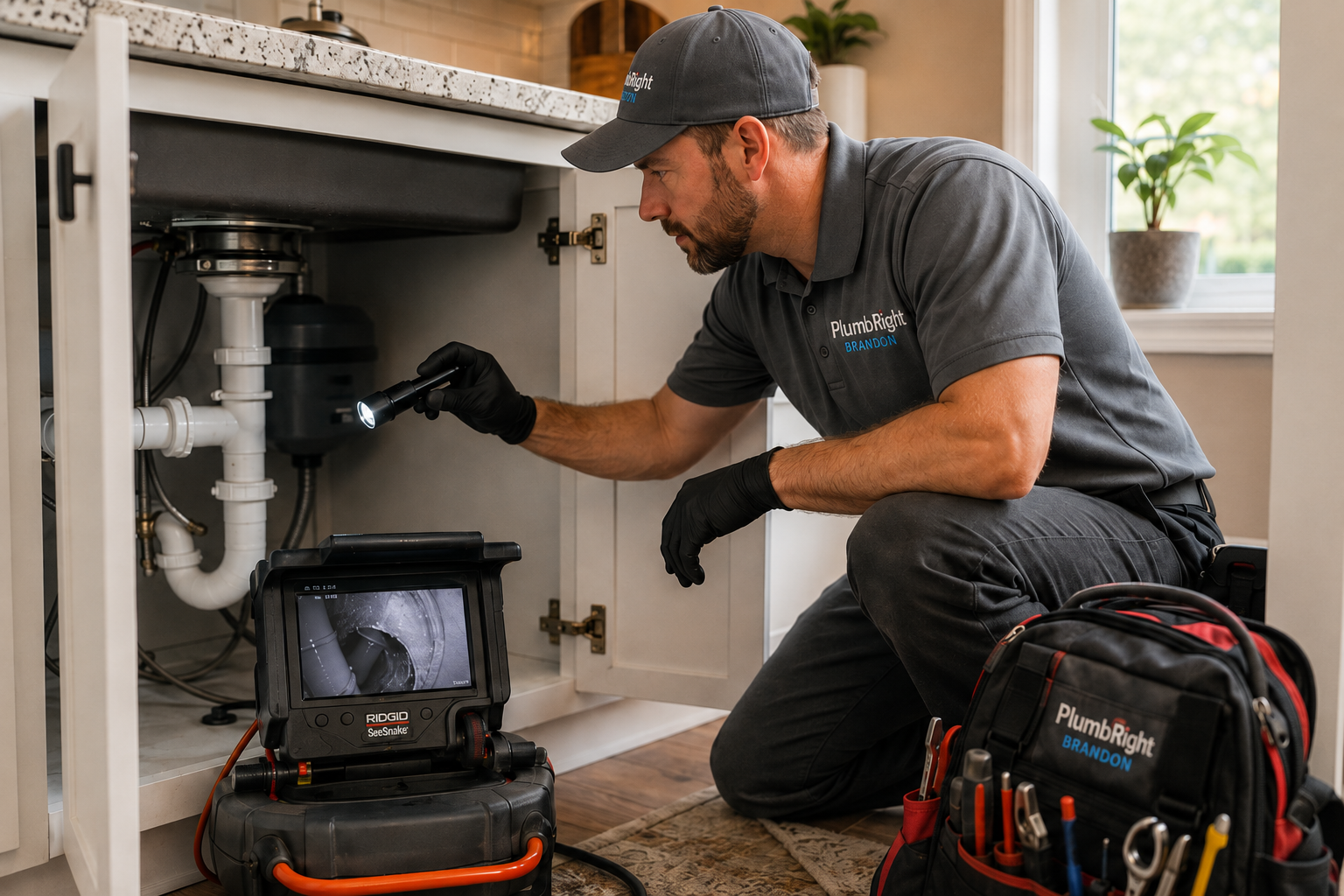
How Do You Check the Water Meter for a Leak?
A meter test can help determine whether water is flowing after the meter when no intentional indoor or outdoor water use should be occurring.
Basic Water-Meter Leak Test
- Turn off indoor faucets and water-using appliances.
- Make sure toilets are not refilling.
- Turn off irrigation and outdoor water use.
- Record the meter reading or leak-indicator position.
- Avoid using water for approximately two hours.
- Check the meter again.
- A changed reading may indicate ongoing water use or a leak.
What the Test Cannot Identify
- The exact leak location
- Whether the source is indoors or outdoors
- Whether a fixture, irrigation system, or pipe is responsible
- How much access will be required
- Whether a local repair or wider replacement is appropriate
Hillsborough County recommends confirming that no indoor or irrigation water is being used before comparing readings. Review the County’s water-leak and meter guidance.

Plumbing Leak Detection in Brandon, FL
Leak detection begins by narrowing the likely system and source instead of assuming every wet area requires immediate wall or floor removal.
- Reviewing when and where moisture appears
- Checking visible pipes, connections, and valves
- Comparing hot- and cold-water symptoms
- Reviewing meter activity and water pressure
- Isolating fixtures or branches when possible
- Checking water-heater, recirculation, and appliance connections
- Comparing indoor, outdoor, continuous, and intermittent symptoms
Water and Pipe Leak Repair in Brandon, FL
Water leak repair depends on the failed component, pipe material, location, access, and condition of the surrounding plumbing.
Possible Repairs
- Damaged pipe section
- Fitting, joint, or threaded connection
- Shutoff or pressure-reducing valve
- Flexible supply connector
- Appliance or exterior faucet connection
- Water-heater or recirculation connection
Common Leak Locations
- Elbows, tees, couplings, and adapters
- Threaded, soldered, crimp, or expansion joints
- Corroded pipe walls
- Pipe penetrations and supports
- Mechanical and appliance connections
Why Pipes Leak
- Corrosion or material deterioration
- Excessive pressure or water hammer
- Movement, vibration, or poor support
- Previous repair failure
- Physical impact or soil movement
- Damaged or incompatible fittings
What Should You Do if a Pipe Is Actively Leaking?
- Stop using the affected fixture.
- Close the nearest clearly identified shutoff when safe.
- Use the main shutoff when necessary and safely accessible.
- Keep people away from wet electrical equipment.
- Move belongings away from spreading clean water when safe.
- Call and explain whether the water is still flowing.
Do Not
- Enter standing water near electricity
- Touch wet outlets, cords, panels, or appliances
- Force a seized or heavily corroded valve
- Cut into a wall without knowing what is behind it
- Apply an unsafe patch to a hot or pressurized pipe
- Assume the visible wet spot is the source
Wall and Ceiling Leak Detection
Water on a wall or ceiling may originate from a supply pipe, upstairs fixture, drain, water heater, appliance line, roof, HVAC condensate, exterior opening, or condensation.
Possible Plumbing Sources
- Hot- or cold-water supply pipe
- Shower, bathtub, toilet, sink, or vanity connection
- Water heater or appliance supply line
- Upper-floor drain or waste pipe
What if the Ceiling Is Sagging?
Do not stand beneath a ceiling that is bulging, sagging, cracking, or releasing water. Keep people and pets away. Do not puncture the ceiling, touch wet light fixtures, move wiring, or enter standing water to reach the source.
Ceiling removal, electrical inspection, structural assessment, drying, drywall replacement, and restoration require separate consideration.
Suspected Under-Floor or Slab-Area Water Leaks
Under-floor symptoms may involve hot- or cold-water piping, a recirculation line, drain piping, a private water service, or another source unrelated to plumbing.
Possible Warning Signs
- Warm floor area
- Moisture appearing through flooring
- Unexplained meter activity
- Reduced water pressure
- Sound of water beneath the floor
- Water at a wall-floor joint
- Repeated flooring damage
Possible Repair Paths After Confirmation
- Accessing and repairing the damaged section
- Rerouting or replacing a water-line run
- Isolating a failed or unused section
- Repairing a private service line
- Coordinating flooring or concrete access
Main Water-Line Repair and Exterior Leaks
A private water-service line generally carries water from the meter area toward the building.
Possible Private-Line Warning Signs
- Wet ground during dry weather
- Unexplained outdoor pooling
- Reduced pressure throughout the property
- Meter movement while indoor fixtures are off
- Water between the meter and building
- Soft soil, erosion, or repeated line repairs
Private Line or Public Utility?
A private-side problem becomes more likely when only one property is affected, the meter records unexplained use, or moisture appears between the meter and building.
A public-side problem becomes more likely when several nearby properties lose pressure, street flooding appears without rain, or a wider outage occurs. Public utility problems should be reported through the appropriate official process.
Low and High Water Pressure
Pressure changes may involve a fixture, a valve, a pressure regulator, private service piping, a leak, water-treatment equipment, demand, or utility conditions.
Low Pressure at One Fixture
- Clogged aerator or restricted showerhead
- Failed cartridge
- Partially closed supply stop
- Damaged connector
- Fixture-specific buildup
Low Pressure Throughout the Property
- Active water leak
- Main or branch valve
- Pressure regulator
- Private service-line restriction
- Corroded or undersized piping
- Water softener, filter, or utility conditions
Fixture-specific concerns are covered on the bathroom plumbing page and kitchen plumbing page.
Galvanized Pipe and Water-Line Replacement in Brandon
Replacement may be considered when corrosion, repeated leaks, restricted flow, failed fittings, or wider pipe deterioration makes a localized repair less practical.
Galvanized Pipe Warning Signs
- Low flow at several fixtures
- Rust-colored water
- Repeated leaks or corroded exposed pipe
- Restricted hot- or cold-water branches
- Leaking threaded fittings
- Uneven pressure or visible buildup
One visible galvanized section does not prove that the entire property requires repiping.
Possible Replacement Scopes
- Replacing one branch line
- Rerouting a water line
- Replacing accessible distribution piping
- Replacing a private service line
- Partial repiping
- Wider property repiping
Permit and inspection requirements depend on the work. Review current Hillsborough County homeowner permit guidance.
Plumbing Repair or Pipe Replacement?
Age alone should not determine replacement. Consider the material, leak history, corrosion, pressure, access, previous repairs, flow, and surrounding damage.
| Plumbing condition | Localized repair may be appropriate | Wider replacement may be appropriate |
|---|---|---|
| One leaking fitting | Fitting is accessible and surrounding pipe is sound | Nearby piping shows wider deterioration |
| Failed shutoff valve | Valve can be replaced without wider damage | Connected piping is heavily corroded |
| Small damaged pipe section | Damage is isolated | Similar failures are occurring elsewhere |
| Pinhole leak | Pipe beyond the leak appears stable | Repeated pinholes are developing |
| Galvanized pipe leak | A small isolated repair is practical | Corrosion and flow restriction are widespread |
| Private service-line leak | Damage is localized and accessible | The line has repeated failures |
| Under-floor leak | Targeted access is practical | Rerouting may reduce repeated access |
Fixture, Appliance, Water-Heater, and Drain Leak Boundaries
Fixture Areas
A sink, toilet, shower, or bathtub leak may involve a fixture body, cartridge, supply connector, shutoff, drain assembly, seal, or concealed pipe.
Appliance Connections
Washing-machine hoses, dishwasher lines, refrigerator tubing, filters, reverse-osmosis lines, and softeners may leak at valves or connectors.
Water-Heater Area
Water may originate from inlet or outlet piping, valves, relief piping, expansion components, recirculation, condensate, the tank, or a nearby line.
Drain Leak vs. Pressurized Leak
A supply leak may continue while the water remains on. A drain leak may appear mainly when a sink drains, toilet flushes, shower runs, bathtub empties, or an appliance discharges.
Relevant Service Pages
For heater-specific problems, visit the water-heater service page. For slow drains, wastewater, sewer odors, and drain-pipe failures, visit the drain cleaning and sewer-line page.
Smart Leak Detection and Flow Monitoring
Leak-detection devices may help identify unexpected moisture or unusual water flow, but they do not replace source identification or plumbing repair.
Point Moisture Sensors
Placed near appliances, water heaters, cabinets, or other leak-prone areas.
Flow Monitoring
Tracks water movement or usage patterns at a selected part of the plumbing system.
Automatic Shutoff Systems
May close a compatible valve when device rules or sensors detect a possible problem.
Device performance may depend on placement, power, connectivity, minimum detectable flow, calibration, valve configuration, and system coverage. Review the EPA leak-detection and flow-monitoring guide.
How Can You Reduce the Risk of Future Plumbing Leaks?
No property can eliminate every leak risk, but routine observation can help identify deteriorating connectors, valves, piping, and pressure problems before a larger failure develops.
Check Visible Connections
Look periodically at accessible shutoff valves, fixture connectors, appliance hoses, water-heater connections, and exposed piping.
Watch Water Use and Pressure
Investigate unexplained meter activity, recurring pressure changes, water hammer, pipe noise, or repeated fixture failures.
Prepare for a Leak
Know the locations of the main and fixture shutoffs, replace damaged connectors, and consider compatible moisture or flow sensors in leak-prone areas.
Plumbing Repair and Water-Damage Restoration Are Different
Plumbing service may identify and repair the source of water. Water can remain inside building materials after the plumbing source has been stopped.
How Does Plumbing Repair and Leak Detection Work?
Describe the Symptoms
Explain where and when water appears, whether it is hot or cold, and whether pressure or meter activity has changed.
Identify the Likely System
The source may involve supply piping, fixtures, appliances, a water heater, a drain, irrigation, or a private service line.
Isolate the Problem
Valves, fixtures, branches, appliances, and operating conditions may be compared to narrow the source.
Determine Access
The source may be visible, behind a wall, above a ceiling, beneath flooring, outdoors, or below concrete.
Review Repair and Test
Options and testing depend on the confirmed source, material, access, pressure, meter activity, and system behavior.
What Information Should You Provide When Requesting Leak Detection?
Clear details can help distinguish an active pipe leak from an intermittent fixture, appliance, drainage, irrigation, or building-envelope problem.
What Affects Plumbing Repair and Leak Detection Costs?
Cost depends on the source, location, access, material, investigation process, and repair scope.
Plumbing Repair in Brandon, FL and Nearby Areas
Request plumbing repair and leak detection in Brandon and nearby communities. Availability depends on the location, source, access, repair scope, safety conditions, and current schedule.
Explore the main local page for a plumber in Brandon, FL.
Related Plumbing Services
Frequently Asked Questions
How do I know whether I have a hidden plumbing leak?
What is the difference between leak detection and leak repair?
Can I test for a water leak using the meter?
Does leak detection always avoid opening walls?
What can cause a wet ceiling?
Is a warm floor always a slab leak?
Can a leaking pipe be repaired without replacing the entire line?
What causes low water pressure throughout a property?
Do you replace galvanized pipes in Brandon?
Is water-line replacement different from repiping?
Does plumbing repair include drywall and water-damage restoration?
How do I find plumbing repair near me in Brandon?
Request Plumbing Repair and Leak Detection in Brandon
Unexplained moisture, pressure loss, meter movement, corroded piping, failed valves, and repeated pipe leaks may indicate a plumbing problem that needs assessment. Describe where the water appears, whether it is active, whether pressure has changed, and whether a local or main shutoff has been used.